
Q&A on HOCHBAHN’s switch to electric buses:

In parallel with the switch to electric buses, HOCHBAHN has been gradually converting its existing conventionally powered vehicles to HVO (hydrotreated vegetable oils) fuels since the start of 2026. HVO fuels are renewable diesel fuels produced from vegetable oils, used cooking fats or other biogenic waste materials. Depending on the raw material base and production process, the calculated greenhouse gas emissions are significantly lower than those of fossil diesel. To achieve the greatest possible reduction whilst ensuring there is no competition with food production, HOCHBAHN stipulated in its tender that only European HVO100, produced from 100 per cent waste and residual materials, should be supplied. Furthermore, the reduction in emissions resulting from the production and combustion of the fuel must amount to at least 85 per cent compared with fossil diesel, in accordance with DIN EN 590.
We are deliberately making our bus fleet more flexible in order to become more resilient to crises in our operations. Up to 150 new vehicles with internal combustion engines will therefore be added to the fleet. They are designed to be operated independently of the company’s own charging infrastructure. This provides flexibility in day-to-day operations and security in exceptional circumstances.
Scenarios in which such a fleet can make our operations more resilient to crises include, for example:
- widespread disruptions to the energy supply
- a sharp, short-term rise in transport demand, such as during evacuations
The combination of electric and conventional buses running on alternative fuels makes operations more stable and flexible overall. Both types of propulsion have their own advantages depending on the situation.
Electric buses produce no direct CO₂ emissions from their powertrain and can reduce emissions compared with conventional buses. They are particularly advantageous when fuel is in short supply or its price fluctuates significantly. Operating on electricity then ensures greater independence.
Buses running on HVO fuel, on the other hand, are helpful when there is temporarily insufficient electricity available or when a large number of vehicles are needed at short notice.
We want to move Hamburg increasingly towards locally lower-emission powertrains, such as those used in electric buses, rather than conventional diesel engines, whilst not losing sight of the global implications. That is why, in two major tenders for electric buses, we have enshrined social and environmental aspects along the supply chains as award criteria. After all, the flip side of more climate-friendly electric mobility is that battery-powered vehicles face criticism due to potential negative environmental and social impacts associated with battery production.
Specifically, in the tenders we ask bus manufacturers about their approaches to human rights due diligence within their supply chains. In other words, what are manufacturers doing to ensure transparency in their supply chains and to embed social and environmental responsibility within them? The focus of the award criteria is on measures relating to battery manufacturing and the raw materials used in batteries.
Our e-buses are powered by certified green electricity.
Even more HOCHBAHN for Hamburg:
This is how HOCHBAHN reduces emissions and saves energy
What measures is HOCHBAHN implementing to promote climate protection and energy efficiency? Projects, targets and specific savings.
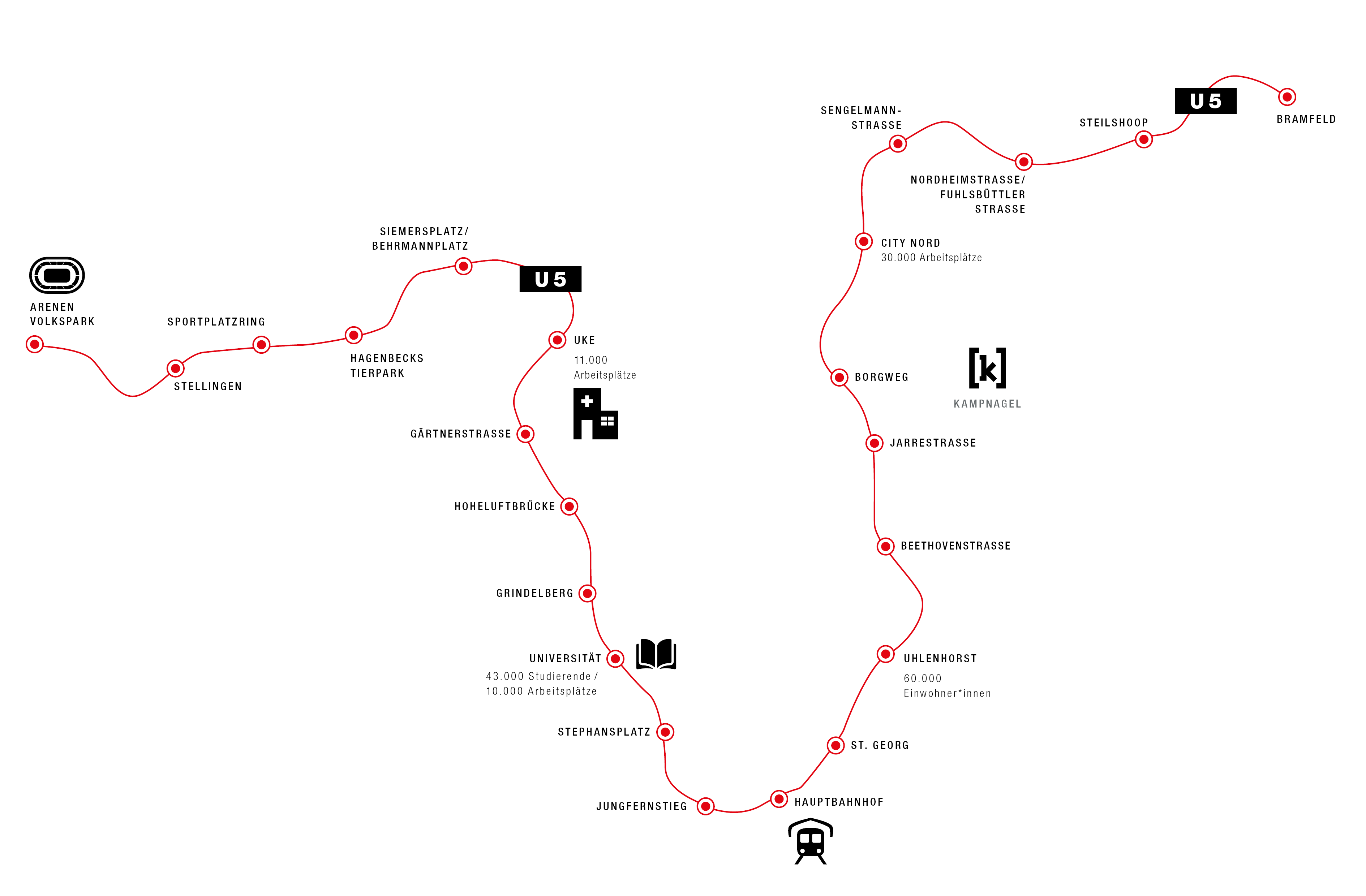
Underground expansion for Hamburg
U3, U4, U5: HOCHBAHN is extensively expanding its underground network to ensure that the mobility revolution succeeds and people can get around the city more quickly.
Corporate reports
The whole world of HOCHBAHN: Find out here how we ensure reliable transport in Hamburg. You can find all the figures, data and facts in the management report, the annual financial statements and the sustainability report.